•  
Environmental Pollution In Bangladesh

Environmental Pollution In Bangladesh

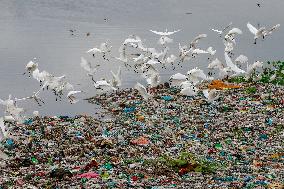
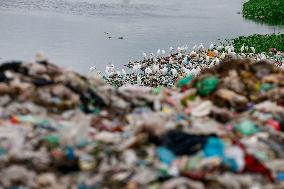
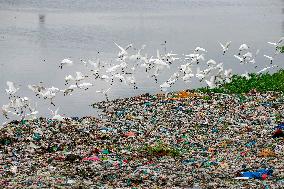
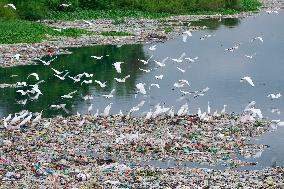
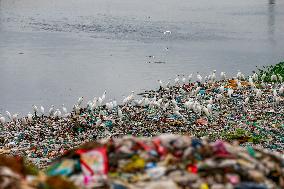
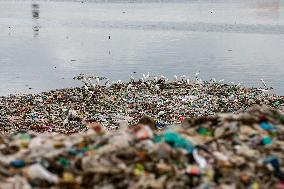
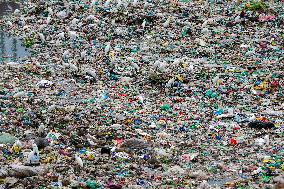
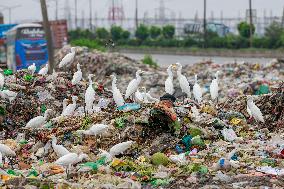
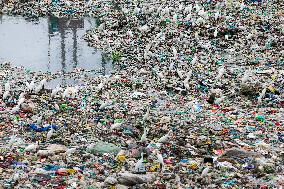
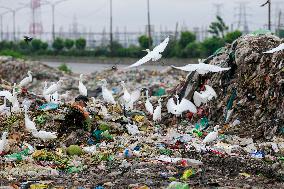
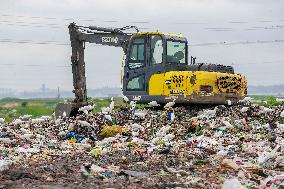
October 02, 2025, Dhaka, Bangladesh: The rivers and canals around Dhaka were once vital sanctuaries of biodiversity. Countless fish swam in their waters, serving as the main food source for fish-eating birds. But now that scene belongs to the past. What was once clear water is now occupied by heaps of garbage. Plastic, polythene, industrial waste, and household trash have severely polluted the water. Faced with a food crisis, fish-eating egrets are being forced to search for food in these piles of waste. Their natural food—fish—is no longer easily available, compelling them to look for alternatives. In Bangladesh, the filling up of rivers and wetlands, illegal encroachment, and plastic pollution together are pushing aquatic ecosystems towards destruction. These wetlands once provided shelter to thousands of native and migratory birds. But in recent years, their numbers have sharply declined. From the haors to Dhaka’s Turag and Balu rivers and other wetlands, the picture is the same: encroachment, landfilling,

  •  
Environmental Pollution In Bangladesh

Environmental Pollution In Bangladesh

October 02, 2025, Dhaka, Bangladesh: The rivers and canals around Dhaka were once vital sanctuaries of biodiversity. Countless fish swam in their waters, serving as the main food source for fish-eating birds. But now that scene belongs to the past. What was once clear water is now occupied by heaps of garbage. Plastic, polythene, industrial waste, and household trash have severely polluted the water. Faced with a food crisis, fish-eating egrets are being forced to search for food in these piles of waste. Their natural food—fish—is no longer easily available, compelling them to look for alternatives. In Bangladesh, the filling up of rivers and wetlands, illegal encroachment, and plastic pollution together are pushing aquatic ecosystems towards destruction. These wetlands once provided shelter to thousands of native and migratory birds. But in recent years, their numbers have sharply declined. From the haors to Dhaka’s Turag and Balu rivers and other wetlands, the picture is the same: encroachment, landfilling,

  •  
Environmental Pollution In Bangladesh

Environmental Pollution In Bangladesh

October 02, 2025, Dhaka, Bangladesh: The rivers and canals around Dhaka were once vital sanctuaries of biodiversity. Countless fish swam in their waters, serving as the main food source for fish-eating birds. But now that scene belongs to the past. What was once clear water is now occupied by heaps of garbage. Plastic, polythene, industrial waste, and household trash have severely polluted the water. Faced with a food crisis, fish-eating egrets are being forced to search for food in these piles of waste. Their natural food—fish—is no longer easily available, compelling them to look for alternatives. In Bangladesh, the filling up of rivers and wetlands, illegal encroachment, and plastic pollution together are pushing aquatic ecosystems towards destruction. These wetlands once provided shelter to thousands of native and migratory birds. But in recent years, their numbers have sharply declined. From the haors to Dhaka’s Turag and Balu rivers and other wetlands, the picture is the same: encroachment, landfilling,

  •  
Environmental Pollution In Bangladesh

Environmental Pollution In Bangladesh

October 02, 2025, Dhaka, Bangladesh: The rivers and canals around Dhaka were once vital sanctuaries of biodiversity. Countless fish swam in their waters, serving as the main food source for fish-eating birds. But now that scene belongs to the past. What was once clear water is now occupied by heaps of garbage. Plastic, polythene, industrial waste, and household trash have severely polluted the water. Faced with a food crisis, fish-eating egrets are being forced to search for food in these piles of waste. Their natural food—fish—is no longer easily available, compelling them to look for alternatives. In Bangladesh, the filling up of rivers and wetlands, illegal encroachment, and plastic pollution together are pushing aquatic ecosystems towards destruction. These wetlands once provided shelter to thousands of native and migratory birds. But in recent years, their numbers have sharply declined. From the haors to Dhaka’s Turag and Balu rivers and other wetlands, the picture is the same: encroachment, landfilling,

  •  
Environmental Pollution In Bangladesh

Environmental Pollution In Bangladesh

October 02, 2025, Dhaka, Bangladesh: The rivers and canals around Dhaka were once vital sanctuaries of biodiversity. Countless fish swam in their waters, serving as the main food source for fish-eating birds. But now that scene belongs to the past. What was once clear water is now occupied by heaps of garbage. Plastic, polythene, industrial waste, and household trash have severely polluted the water. Faced with a food crisis, fish-eating egrets are being forced to search for food in these piles of waste. Their natural food—fish—is no longer easily available, compelling them to look for alternatives. In Bangladesh, the filling up of rivers and wetlands, illegal encroachment, and plastic pollution together are pushing aquatic ecosystems towards destruction. These wetlands once provided shelter to thousands of native and migratory birds. But in recent years, their numbers have sharply declined. From the haors to Dhaka’s Turag and Balu rivers and other wetlands, the picture is the same: encroachment, landfilling,

  •  
Environmental Pollution In Bangladesh

Environmental Pollution In Bangladesh

October 02, 2025, Dhaka, Bangladesh: The rivers and canals around Dhaka were once vital sanctuaries of biodiversity. Countless fish swam in their waters, serving as the main food source for fish-eating birds. But now that scene belongs to the past. What was once clear water is now occupied by heaps of garbage. Plastic, polythene, industrial waste, and household trash have severely polluted the water. Faced with a food crisis, fish-eating egrets are being forced to search for food in these piles of waste. Their natural food—fish—is no longer easily available, compelling them to look for alternatives. In Bangladesh, the filling up of rivers and wetlands, illegal encroachment, and plastic pollution together are pushing aquatic ecosystems towards destruction. These wetlands once provided shelter to thousands of native and migratory birds. But in recent years, their numbers have sharply declined. From the haors to Dhaka’s Turag and Balu rivers and other wetlands, the picture is the same: encroachment, landfilling,

  •  
Environmental Pollution In Bangladesh

Environmental Pollution In Bangladesh

October 02, 2025, Dhaka, Bangladesh: The rivers and canals around Dhaka were once vital sanctuaries of biodiversity. Countless fish swam in their waters, serving as the main food source for fish-eating birds. But now that scene belongs to the past. What was once clear water is now occupied by heaps of garbage. Plastic, polythene, industrial waste, and household trash have severely polluted the water. Faced with a food crisis, fish-eating egrets are being forced to search for food in these piles of waste. Their natural food—fish—is no longer easily available, compelling them to look for alternatives. In Bangladesh, the filling up of rivers and wetlands, illegal encroachment, and plastic pollution together are pushing aquatic ecosystems towards destruction. These wetlands once provided shelter to thousands of native and migratory birds. But in recent years, their numbers have sharply declined. From the haors to Dhaka’s Turag and Balu rivers and other wetlands, the picture is the same: encroachment, landfilling,

  •  
Environmental Pollution In Bangladesh

Environmental Pollution In Bangladesh

October 02, 2025, Dhaka, Bangladesh: The rivers and canals around Dhaka were once vital sanctuaries of biodiversity. Countless fish swam in their waters, serving as the main food source for fish-eating birds. But now that scene belongs to the past. What was once clear water is now occupied by heaps of garbage. Plastic, polythene, industrial waste, and household trash have severely polluted the water. Faced with a food crisis, fish-eating egrets are being forced to search for food in these piles of waste. Their natural food—fish—is no longer easily available, compelling them to look for alternatives. In Bangladesh, the filling up of rivers and wetlands, illegal encroachment, and plastic pollution together are pushing aquatic ecosystems towards destruction. These wetlands once provided shelter to thousands of native and migratory birds. But in recent years, their numbers have sharply declined. From the haors to Dhaka’s Turag and Balu rivers and other wetlands, the picture is the same: encroachment, landfilling,

  •  
Environmental Pollution In Bangladesh

Environmental Pollution In Bangladesh

October 02, 2025, Dhaka, Bangladesh: The rivers and canals around Dhaka were once vital sanctuaries of biodiversity. Countless fish swam in their waters, serving as the main food source for fish-eating birds. But now that scene belongs to the past. What was once clear water is now occupied by heaps of garbage. Plastic, polythene, industrial waste, and household trash have severely polluted the water. Faced with a food crisis, fish-eating egrets are being forced to search for food in these piles of waste. Their natural food—fish—is no longer easily available, compelling them to look for alternatives. In Bangladesh, the filling up of rivers and wetlands, illegal encroachment, and plastic pollution together are pushing aquatic ecosystems towards destruction. These wetlands once provided shelter to thousands of native and migratory birds. But in recent years, their numbers have sharply declined. From the haors to Dhaka’s Turag and Balu rivers and other wetlands, the picture is the same: encroachment, landfilling,

  •  
Environmental Pollution In Bangladesh

Environmental Pollution In Bangladesh

October 02, 2025, Dhaka, Bangladesh: The rivers and canals around Dhaka were once vital sanctuaries of biodiversity. Countless fish swam in their waters, serving as the main food source for fish-eating birds. But now that scene belongs to the past. What was once clear water is now occupied by heaps of garbage. Plastic, polythene, industrial waste, and household trash have severely polluted the water. Faced with a food crisis, fish-eating egrets are being forced to search for food in these piles of waste. Their natural food—fish—is no longer easily available, compelling them to look for alternatives. In Bangladesh, the filling up of rivers and wetlands, illegal encroachment, and plastic pollution together are pushing aquatic ecosystems towards destruction. These wetlands once provided shelter to thousands of native and migratory birds. But in recent years, their numbers have sharply declined. From the haors to Dhaka’s Turag and Balu rivers and other wetlands, the picture is the same: encroachment, landfilling,

  •  
Environmental Pollution In Bangladesh

Environmental Pollution In Bangladesh

October 02, 2025, Dhaka, Bangladesh: The rivers and canals around Dhaka were once vital sanctuaries of biodiversity. Countless fish swam in their waters, serving as the main food source for fish-eating birds. But now that scene belongs to the past. What was once clear water is now occupied by heaps of garbage. Plastic, polythene, industrial waste, and household trash have severely polluted the water. Faced with a food crisis, fish-eating egrets are being forced to search for food in these piles of waste. Their natural food—fish—is no longer easily available, compelling them to look for alternatives. In Bangladesh, the filling up of rivers and wetlands, illegal encroachment, and plastic pollution together are pushing aquatic ecosystems towards destruction. These wetlands once provided shelter to thousands of native and migratory birds. But in recent years, their numbers have sharply declined. From the haors to Dhaka’s Turag and Balu rivers and other wetlands, the picture is the same: encroachment, landfilling,

  •  
Air Pollution - Dhaka

Air Pollution - Dhaka

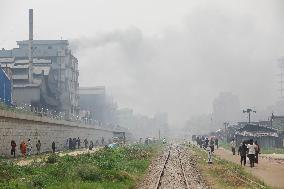
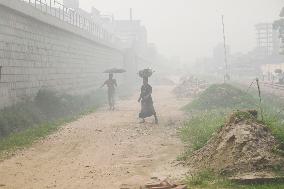
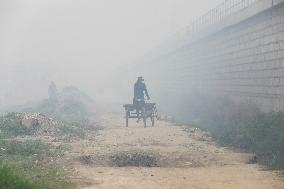
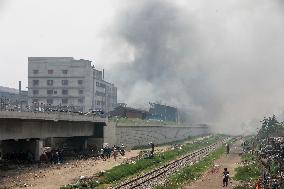
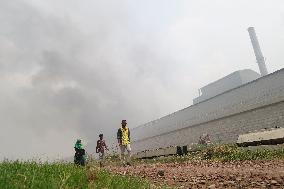
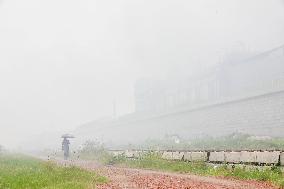
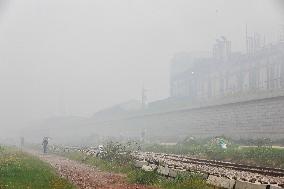
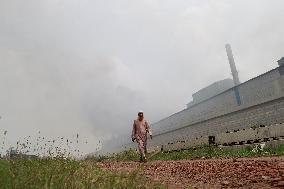
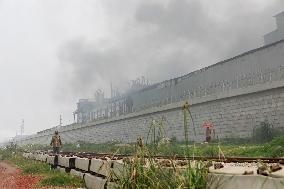
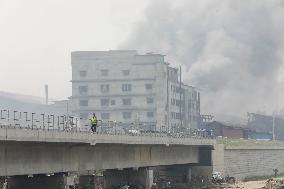
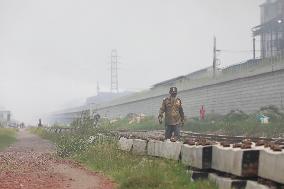
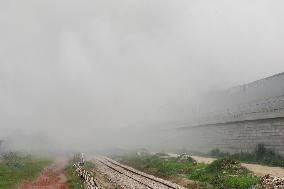
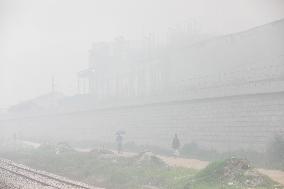
People pass an industrial area as smoke rises from re-rolling mills at Shyampur, in Dhaka, Bangladesh, May 15, 2024. Bangladesh faces a high level of air pollution, which costs about 9% of the GDP annually, according to a study by the World Bank. Most steel re-rolling mills in and around the capital have been running without necessary air pollution control system posing risk of air pollution and health hazard. Photo by Suvra Kanti Das/ABACAPRESS.COM

  •  
Air Pollution - Dhaka

Air Pollution - Dhaka

People pass an industrial area as smoke rises from re-rolling mills at Shyampur, in Dhaka, Bangladesh, May 15, 2024. Bangladesh faces a high level of air pollution, which costs about 9% of the GDP annually, according to a study by the World Bank. Most steel re-rolling mills in and around the capital have been running without necessary air pollution control system posing risk of air pollution and health hazard. Photo by Suvra Kanti Das/ABACAPRESS.COM

  •  
Air Pollution - Dhaka

Air Pollution - Dhaka

People pass an industrial area as smoke rises from re-rolling mills at Shyampur, in Dhaka, Bangladesh, May 15, 2024. Bangladesh faces a high level of air pollution, which costs about 9% of the GDP annually, according to a study by the World Bank. Most steel re-rolling mills in and around the capital have been running without necessary air pollution control system posing risk of air pollution and health hazard. Photo by Suvra Kanti Das/ABACAPRESS.COM

  •  
Air Pollution - Dhaka

Air Pollution - Dhaka

People pass an industrial area as smoke rises from re-rolling mills at Shyampur, in Dhaka, Bangladesh, May 15, 2024. Bangladesh faces a high level of air pollution, which costs about 9% of the GDP annually, according to a study by the World Bank. Most steel re-rolling mills in and around the capital have been running without necessary air pollution control system posing risk of air pollution and health hazard. Photo by Suvra Kanti Das/ABACAPRESS.COM

  •  
Air Pollution - Dhaka

Air Pollution - Dhaka

People pass an industrial area as smoke rises from re-rolling mills at Shyampur, in Dhaka, Bangladesh, May 15, 2024. Bangladesh faces a high level of air pollution, which costs about 9% of the GDP annually, according to a study by the World Bank. Most steel re-rolling mills in and around the capital have been running without necessary air pollution control system posing risk of air pollution and health hazard. Photo by Suvra Kanti Das/ABACAPRESS.COM

  •  
Air Pollution - Dhaka

Air Pollution - Dhaka

People pass an industrial area as smoke rises from re-rolling mills at Shyampur, in Dhaka, Bangladesh, May 15, 2024. Bangladesh faces a high level of air pollution, which costs about 9% of the GDP annually, according to a study by the World Bank. Most steel re-rolling mills in and around the capital have been running without necessary air pollution control system posing risk of air pollution and health hazard. Photo by Suvra Kanti Das/ABACAPRESS.COM

  •  
Air Pollution - Dhaka

Air Pollution - Dhaka

People pass an industrial area as smoke rises from re-rolling mills at Shyampur, in Dhaka, Bangladesh, May 15, 2024. Bangladesh faces a high level of air pollution, which costs about 9% of the GDP annually, according to a study by the World Bank. Most steel re-rolling mills in and around the capital have been running without necessary air pollution control system posing risk of air pollution and health hazard. Photo by Suvra Kanti Das/ABACAPRESS.COM

  •  
Air Pollution - Dhaka

Air Pollution - Dhaka

People pass an industrial area as smoke rises from re-rolling mills at Shyampur, in Dhaka, Bangladesh, May 15, 2024. Bangladesh faces a high level of air pollution, which costs about 9% of the GDP annually, according to a study by the World Bank. Most steel re-rolling mills in and around the capital have been running without necessary air pollution control system posing risk of air pollution and health hazard. Photo by Suvra Kanti Das/ABACAPRESS.COM

  •  
Air Pollution - Dhaka

Air Pollution - Dhaka

People pass an industrial area as smoke rises from re-rolling mills at Shyampur, in Dhaka, Bangladesh, May 15, 2024. Bangladesh faces a high level of air pollution, which costs about 9% of the GDP annually, according to a study by the World Bank. Most steel re-rolling mills in and around the capital have been running without necessary air pollution control system posing risk of air pollution and health hazard. Photo by Suvra Kanti Das/ABACAPRESS.COM

  •  
Air Pollution - Dhaka

Air Pollution - Dhaka

People pass an industrial area as smoke rises from re-rolling mills at Shyampur, in Dhaka, Bangladesh, May 15, 2024. Bangladesh faces a high level of air pollution, which costs about 9% of the GDP annually, according to a study by the World Bank. Most steel re-rolling mills in and around the capital have been running without necessary air pollution control system posing risk of air pollution and health hazard. Photo by Suvra Kanti Das/ABACAPRESS.COM

  •  
Air Pollution - Dhaka

Air Pollution - Dhaka

People pass an industrial area as smoke rises from re-rolling mills at Shyampur, in Dhaka, Bangladesh, May 15, 2024. Bangladesh faces a high level of air pollution, which costs about 9% of the GDP annually, according to a study by the World Bank. Most steel re-rolling mills in and around the capital have been running without necessary air pollution control system posing risk of air pollution and health hazard. Photo by Suvra Kanti Das/ABACAPRESS.COM

  •  
Air Pollution - Dhaka

Air Pollution - Dhaka

People pass an industrial area as smoke rises from re-rolling mills at Shyampur, in Dhaka, Bangladesh, May 15, 2024. Bangladesh faces a high level of air pollution, which costs about 9% of the GDP annually, according to a study by the World Bank. Most steel re-rolling mills in and around the capital have been running without necessary air pollution control system posing risk of air pollution and health hazard. Photo by Suvra Kanti Das/ABACAPRESS.COM

  •  
Air Pollution - Dhaka

Air Pollution - Dhaka

People pass an industrial area as smoke rises from re-rolling mills at Shyampur, in Dhaka, Bangladesh, May 15, 2024. Bangladesh faces a high level of air pollution, which costs about 9% of the GDP annually, according to a study by the World Bank. Most steel re-rolling mills in and around the capital have been running without necessary air pollution control system posing risk of air pollution and health hazard. Photo by Suvra Kanti Das/ABACAPRESS.COM

  •  
Air Pollution - Dhaka

Air Pollution - Dhaka

People pass an industrial area as smoke rises from re-rolling mills at Shyampur, in Dhaka, Bangladesh, May 15, 2024. Bangladesh faces a high level of air pollution, which costs about 9% of the GDP annually, according to a study by the World Bank. Most steel re-rolling mills in and around the capital have been running without necessary air pollution control system posing risk of air pollution and health hazard. Photo by Suvra Kanti Das/ABACAPRESS.COM

  •  
Air Pollution - Dhaka

Air Pollution - Dhaka

People pass an industrial area as smoke rises from re-rolling mills at Shyampur, in Dhaka, Bangladesh, May 15, 2024. Bangladesh faces a high level of air pollution, which costs about 9% of the GDP annually, according to a study by the World Bank. Most steel re-rolling mills in and around the capital have been running without necessary air pollution control system posing risk of air pollution and health hazard. Photo by Suvra Kanti Das/ABACAPRESS.COM

  •  
Air Pollution - Dhaka

Air Pollution - Dhaka

People pass an industrial area as smoke rises from re-rolling mills at Shyampur, in Dhaka, Bangladesh, May 15, 2024. Bangladesh faces a high level of air pollution, which costs about 9% of the GDP annually, according to a study by the World Bank. Most steel re-rolling mills in and around the capital have been running without necessary air pollution control system posing risk of air pollution and health hazard. Photo by Suvra Kanti Das/ABACAPRESS.COM

  •  
CHINA-FUJIAN-XIAMEN-YUNDANG LAKE-ECOLOGICAL TRANSFORMATION (CN)

CHINA-FUJIAN-XIAMEN-YUNDANG LAKE-ECOLOGICAL TRANSFORMATION (CN)

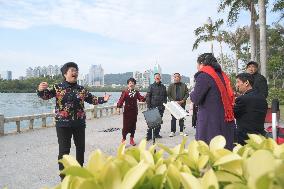
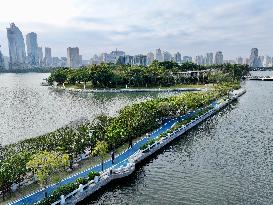
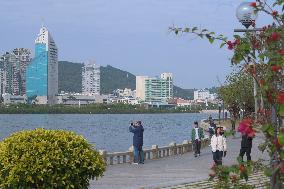
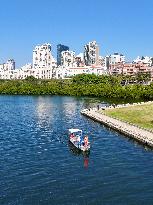
(240221) -- XIAMEN, Feb. 21, 2024 (Xinhua) -- People have fun at a park beside the Yundang Lake in Xiamen, southeast China's Fujian Province, Jan. 24, 2024. The Yundang Lake basin covers an area of 37 square km. Once a harbor connected to the sea, it was well known for its fishing culture. In the 1970s, people reclaimed land from the sea in order to increase grain production, and Yundang became an inner lake. As the population and factories increased, water pollution grew steadily. Industrial wastewater from over 100 factories was discharged directly into the lake, together with untreated sewage from hundreds of thousands of local residents. In the mid-to-late 1980s, various measures were implemented to turn the tide and restore the lake to its former state of health. Industrial enterprises around the lake were all shut down and relocated, sewage plants were built, and seawater was channeled into the lake to revitalize the water body. With the efforts over the past 30-plus years, Yundang Lake, presen

  •  
CHINA-FUJIAN-XIAMEN-YUNDANG LAKE-ECOLOGICAL TRANSFORMATION (CN)

CHINA-FUJIAN-XIAMEN-YUNDANG LAKE-ECOLOGICAL TRANSFORMATION (CN)

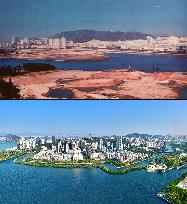
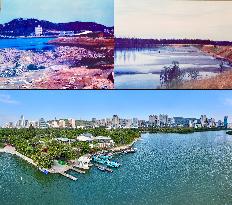
(240221) -- XIAMEN, Feb. 21, 2024 (Xinhua) -- This combo photo shows Yundang Lake in Xiamen, southeast China's Fujian Province, pictured in the 1980s (above, file photo) and a view of Yundang Lake and its surroundings pictured on Jan. 24, 2024 (below, aerial drone photo taken by Jiang Kehong). The Yundang Lake basin covers an area of 37 square km. Once a harbor connected to the sea, it was well known for its fishing culture. In the 1970s, people reclaimed land from the sea in order to increase grain production, and Yundang became an inner lake. As the population and factories increased, water pollution grew steadily. Industrial wastewater from over 100 factories was discharged directly into the lake, together with untreated sewage from hundreds of thousands of local residents. In the mid-to-late 1980s, various measures were implemented to turn the tide and restore the lake to its former state of health. Industrial enterprises around the lake were all shut down and relocated, sewage plants were built, an

  •  
CHINA-FUJIAN-XIAMEN-YUNDANG LAKE-ECOLOGICAL TRANSFORMATION (CN)

CHINA-FUJIAN-XIAMEN-YUNDANG LAKE-ECOLOGICAL TRANSFORMATION (CN)

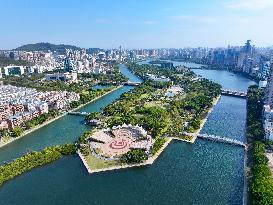
(240221) -- XIAMEN, Feb. 21, 2024 (Xinhua) -- An aerial drone photo taken on Jan. 24, 2024 shows a view of the Bailuzhou Park beside the Yundang Lake in Xiamen, southeast China's Fujian Province. The Yundang Lake basin covers an area of 37 square km. Once a harbor connected to the sea, it was well known for its fishing culture. In the 1970s, people reclaimed land from the sea in order to increase grain production, and Yundang became an inner lake. As the population and factories increased, water pollution grew steadily. Industrial wastewater from over 100 factories was discharged directly into the lake, together with untreated sewage from hundreds of thousands of local residents. In the mid-to-late 1980s, various measures were implemented to turn the tide and restore the lake to its former state of health. Industrial enterprises around the lake were all shut down and relocated, sewage plants were built, and seawater was channeled into the lake to revitalize the water body. With the efforts over the p

  •  
CHINA-FUJIAN-XIAMEN-YUNDANG LAKE-ECOLOGICAL TRANSFORMATION (CN)

CHINA-FUJIAN-XIAMEN-YUNDANG LAKE-ECOLOGICAL TRANSFORMATION (CN)

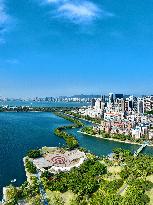
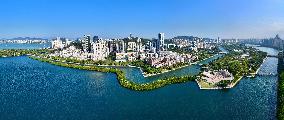
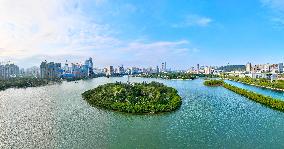
(240221) -- XIAMEN, Feb. 21, 2024 (Xinhua) -- An aerial panoramic drone photo taken on Jan. 24, 2024 shows a view of Yundang Lake and its surroundings in Xiamen, southeast China's Fujian Province. The Yundang Lake basin covers an area of 37 square km. Once a harbor connected to the sea, it was well known for its fishing culture. In the 1970s, people reclaimed land from the sea in order to increase grain production, and Yundang became an inner lake. As the population and factories increased, water pollution grew steadily. Industrial wastewater from over 100 factories was discharged directly into the lake, together with untreated sewage from hundreds of thousands of local residents. In the mid-to-late 1980s, various measures were implemented to turn the tide and restore the lake to its former state of health. Industrial enterprises around the lake were all shut down and relocated, sewage plants were built, and seawater was channeled into the lake to revitalize the water body. With the efforts over the

  •  
CHINA-FUJIAN-XIAMEN-YUNDANG LAKE-ECOLOGICAL TRANSFORMATION (CN)

CHINA-FUJIAN-XIAMEN-YUNDANG LAKE-ECOLOGICAL TRANSFORMATION (CN)

(240221) -- XIAMEN, Feb. 21, 2024 (Xinhua) -- This combo photo shows Yundang Lake in Xiamen, southeast China's Fujian Province, pictured in the 1980s (above, file photos) and a view of Yundang Lake and its surroundings pictured on Jan. 24, 2024 (below, aerial drone photo taken by Jiang Kehong). The Yundang Lake basin covers an area of 37 square km. Once a harbor connected to the sea, it was well known for its fishing culture. In the 1970s, people reclaimed land from the sea in order to increase grain production, and Yundang became an inner lake. As the population and factories increased, water pollution grew steadily. Industrial wastewater from over 100 factories was discharged directly into the lake, together with untreated sewage from hundreds of thousands of local residents. In the mid-to-late 1980s, various measures were implemented to turn the tide and restore the lake to its former state of health. Industrial enterprises around the lake were all shut down and relocated, sewage plants were built, a

  •  
CHINA-FUJIAN-XIAMEN-YUNDANG LAKE-ECOLOGICAL TRANSFORMATION (CN)

CHINA-FUJIAN-XIAMEN-YUNDANG LAKE-ECOLOGICAL TRANSFORMATION (CN)

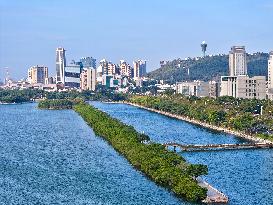
(240221) -- XIAMEN, Feb. 21, 2024 (Xinhua) -- An aerial drone photo taken on Jan. 24, 2024 shows the mangrove forest beside the Yundang Lake in Xiamen, southeast China's Fujian Province. The Yundang Lake basin covers an area of 37 square km. Once a harbor connected to the sea, it was well known for its fishing culture. In the 1970s, people reclaimed land from the sea in order to increase grain production, and Yundang became an inner lake. As the population and factories increased, water pollution grew steadily. Industrial wastewater from over 100 factories was discharged directly into the lake, together with untreated sewage from hundreds of thousands of local residents. In the mid-to-late 1980s, various measures were implemented to turn the tide and restore the lake to its former state of health. Industrial enterprises around the lake were all shut down and relocated, sewage plants were built, and seawater was channeled into the lake to revitalize the water body. With the efforts over the past 30-pl

  •  
CHINA-FUJIAN-XIAMEN-YUNDANG LAKE-ECOLOGICAL TRANSFORMATION (CN)

CHINA-FUJIAN-XIAMEN-YUNDANG LAKE-ECOLOGICAL TRANSFORMATION (CN)

(240221) -- XIAMEN, Feb. 21, 2024 (Xinhua) -- An aerial panoramic drone photo taken on Jan. 24, 2024 shows a view of Yundang Lake and its surroundings in Xiamen, southeast China's Fujian Province. The Yundang Lake basin covers an area of 37 square km. Once a harbor connected to the sea, it was well known for its fishing culture. In the 1970s, people reclaimed land from the sea in order to increase grain production, and Yundang became an inner lake. As the population and factories increased, water pollution grew steadily. Industrial wastewater from over 100 factories was discharged directly into the lake, together with untreated sewage from hundreds of thousands of local residents. In the mid-to-late 1980s, various measures were implemented to turn the tide and restore the lake to its former state of health. Industrial enterprises around the lake were all shut down and relocated, sewage plants were built, and seawater was channeled into the lake to revitalize the water body. With the efforts over the

  •  
CHINA-FUJIAN-XIAMEN-YUNDANG LAKE-ECOLOGICAL TRANSFORMATION (CN)

CHINA-FUJIAN-XIAMEN-YUNDANG LAKE-ECOLOGICAL TRANSFORMATION (CN)

(240221) -- XIAMEN, Feb. 21, 2024 (Xinhua) -- An aerial drone photo taken on Jan. 24, 2024 shows a view of the Bailuzhou Park beside the Yundang Lake in Xiamen, southeast China's Fujian Province. The Yundang Lake basin covers an area of 37 square km. Once a harbor connected to the sea, it was well known for its fishing culture. In the 1970s, people reclaimed land from the sea in order to increase grain production, and Yundang became an inner lake. As the population and factories increased, water pollution grew steadily. Industrial wastewater from over 100 factories was discharged directly into the lake, together with untreated sewage from hundreds of thousands of local residents. In the mid-to-late 1980s, various measures were implemented to turn the tide and restore the lake to its former state of health. Industrial enterprises around the lake were all shut down and relocated, sewage plants were built, and seawater was channeled into the lake to revitalize the water body. With the efforts over the p

  •  
CHINA-FUJIAN-XIAMEN-YUNDANG LAKE-ECOLOGICAL TRANSFORMATION (CN)

CHINA-FUJIAN-XIAMEN-YUNDANG LAKE-ECOLOGICAL TRANSFORMATION (CN)

(240221) -- XIAMEN, Feb. 21, 2024 (Xinhua) -- An aerial drone photo taken on Jan. 24, 2024 shows a trail alongside the Yundang Lake in Xiamen, southeast China's Fujian Province. The Yundang Lake basin covers an area of 37 square km. Once a harbor connected to the sea, it was well known for its fishing culture. In the 1970s, people reclaimed land from the sea in order to increase grain production, and Yundang became an inner lake. As the population and factories increased, water pollution grew steadily. Industrial wastewater from over 100 factories was discharged directly into the lake, together with untreated sewage from hundreds of thousands of local residents. In the mid-to-late 1980s, various measures were implemented to turn the tide and restore the lake to its former state of health. Industrial enterprises around the lake were all shut down and relocated, sewage plants were built, and seawater was channeled into the lake to revitalize the water body. With the efforts over the past 30-plus years,

  •  
CHINA-FUJIAN-XIAMEN-YUNDANG LAKE-ECOLOGICAL TRANSFORMATION (CN)

CHINA-FUJIAN-XIAMEN-YUNDANG LAKE-ECOLOGICAL TRANSFORMATION (CN)

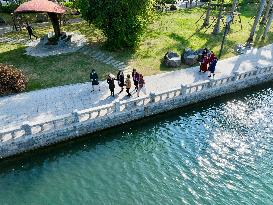
(240221) -- XIAMEN, Feb. 21, 2024 (Xinhua) -- An aerial drone photo taken on Jan. 24, 2024 shows people walking alongside the Yundang Lake in Xiamen, southeast China's Fujian Province. The Yundang Lake basin covers an area of 37 square km. Once a harbor connected to the sea, it was well known for its fishing culture. In the 1970s, people reclaimed land from the sea in order to increase grain production, and Yundang became an inner lake. As the population and factories increased, water pollution grew steadily. Industrial wastewater from over 100 factories was discharged directly into the lake, together with untreated sewage from hundreds of thousands of local residents. In the mid-to-late 1980s, various measures were implemented to turn the tide and restore the lake to its former state of health. Industrial enterprises around the lake were all shut down and relocated, sewage plants were built, and seawater was channeled into the lake to revitalize the water body. With the efforts over the past 30-plus

  •  
CHINA-FUJIAN-XIAMEN-YUNDANG LAKE-ECOLOGICAL TRANSFORMATION (CN)

CHINA-FUJIAN-XIAMEN-YUNDANG LAKE-ECOLOGICAL TRANSFORMATION (CN)

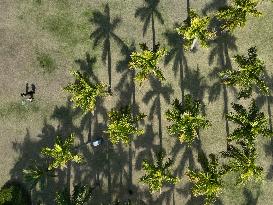
(240221) -- XIAMEN, Feb. 21, 2024 (Xinhua) -- An aerial drone photo taken on Jan. 24, 2024 shows people having fun at the Bailuzhou Park beside the Yundang Lake in Xiamen, southeast China's Fujian Province. The Yundang Lake basin covers an area of 37 square km. Once a harbor connected to the sea, it was well known for its fishing culture. In the 1970s, people reclaimed land from the sea in order to increase grain production, and Yundang became an inner lake. As the population and factories increased, water pollution grew steadily. Industrial wastewater from over 100 factories was discharged directly into the lake, together with untreated sewage from hundreds of thousands of local residents. In the mid-to-late 1980s, various measures were implemented to turn the tide and restore the lake to its former state of health. Industrial enterprises around the lake were all shut down and relocated, sewage plants were built, and seawater was channeled into the lake to revitalize the water body. With the efforts

  •  
CHINA-FUJIAN-XIAMEN-YUNDANG LAKE-ECOLOGICAL TRANSFORMATION (CN)

CHINA-FUJIAN-XIAMEN-YUNDANG LAKE-ECOLOGICAL TRANSFORMATION (CN)

(240221) -- XIAMEN, Feb. 21, 2024 (Xinhua) -- People walk alongside the Yundang Lake in Xiamen, southeast China's Fujian Province, Jan. 24, 2024. The Yundang Lake basin covers an area of 37 square km. Once a harbor connected to the sea, it was well known for its fishing culture. In the 1970s, people reclaimed land from the sea in order to increase grain production, and Yundang became an inner lake. As the population and factories increased, water pollution grew steadily. Industrial wastewater from over 100 factories was discharged directly into the lake, together with untreated sewage from hundreds of thousands of local residents. In the mid-to-late 1980s, various measures were implemented to turn the tide and restore the lake to its former state of health. Industrial enterprises around the lake were all shut down and relocated, sewage plants were built, and seawater was channeled into the lake to revitalize the water body. With the efforts over the past 30-plus years, Yundang Lake, presently dubbed

  •  
CHINA-FUJIAN-XIAMEN-YUNDANG LAKE-ECOLOGICAL TRANSFORMATION (CN)

CHINA-FUJIAN-XIAMEN-YUNDANG LAKE-ECOLOGICAL TRANSFORMATION (CN)

(240221) -- XIAMEN, Feb. 21, 2024 (Xinhua) -- An aerial drone photo taken on Jan. 24, 2024 shows a sanitation boat sailing on the Yundang Lake in Xiamen, southeast China's Fujian Province. The Yundang Lake basin covers an area of 37 square km. Once a harbor connected to the sea, it was well known for its fishing culture. In the 1970s, people reclaimed land from the sea in order to increase grain production, and Yundang became an inner lake. As the population and factories increased, water pollution grew steadily. Industrial wastewater from over 100 factories was discharged directly into the lake, together with untreated sewage from hundreds of thousands of local residents. In the mid-to-late 1980s, various measures were implemented to turn the tide and restore the lake to its former state of health. Industrial enterprises around the lake were all shut down and relocated, sewage plants were built, and seawater was channeled into the lake to revitalize the water body. With the efforts over the past 30-

  •  
Dhaka's Brick Factories - Bangladesh

Dhaka's Brick Factories - Bangladesh

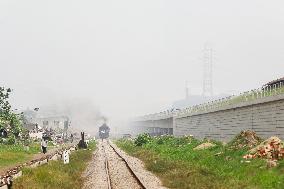
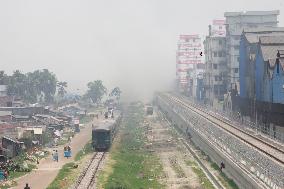
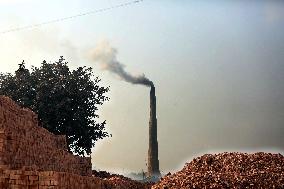
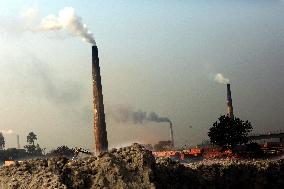
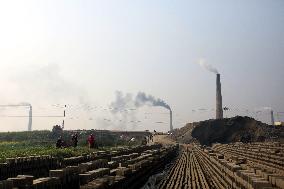
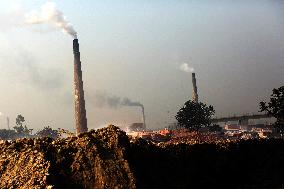
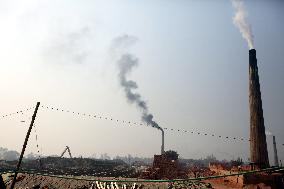
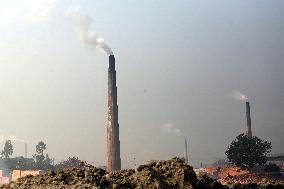
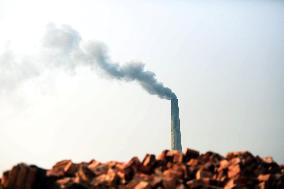
Smoke billows from the chimney of a brick factory in Keraniganj, southwest of Dhaka, Bangladesh,January 29,2024. Dhaka remains one of the most polluted cities globally, with construction debris, industrial pollution, vehicle emissions, and brick kilns identified as significant contributors to air pollution. The Air Quality Life Index (AQLI) rates Bangladesh as one of the most polluted countries in the world. According to the World Health Organization (WHO), air pollution kills an estimated seven million people worldwide every year. Photo by Habibur Rahman/ABACAPRESS.COM

  •  
Dhaka's Brick Factories - Bangladesh

Dhaka's Brick Factories - Bangladesh

Smoke billows from the chimney of a brick factory in Keraniganj, southwest of Dhaka, Bangladesh,January 29,2024. Dhaka remains one of the most polluted cities globally, with construction debris, industrial pollution, vehicle emissions, and brick kilns identified as significant contributors to air pollution. The Air Quality Life Index (AQLI) rates Bangladesh as one of the most polluted countries in the world. According to the World Health Organization (WHO), air pollution kills an estimated seven million people worldwide every year. Photo by Habibur Rahman/ABACAPRESS.COM

  •  
Dhaka's Brick Factories - Bangladesh

Dhaka's Brick Factories - Bangladesh

Smoke billows from the chimney of a brick factory in Keraniganj, southwest of Dhaka, Bangladesh,January 29,2024. Dhaka remains one of the most polluted cities globally, with construction debris, industrial pollution, vehicle emissions, and brick kilns identified as significant contributors to air pollution. The Air Quality Life Index (AQLI) rates Bangladesh as one of the most polluted countries in the world. According to the World Health Organization (WHO), air pollution kills an estimated seven million people worldwide every year. Photo by Habibur Rahman/ABACAPRESS.COM

  •  
Dhaka's Brick Factories - Bangladesh

Dhaka's Brick Factories - Bangladesh

Smoke billows from the chimney of a brick factory in Keraniganj, southwest of Dhaka, Bangladesh,January 29,2024. Dhaka remains one of the most polluted cities globally, with construction debris, industrial pollution, vehicle emissions, and brick kilns identified as significant contributors to air pollution. The Air Quality Life Index (AQLI) rates Bangladesh as one of the most polluted countries in the world. According to the World Health Organization (WHO), air pollution kills an estimated seven million people worldwide every year. Photo by Habibur Rahman/ABACAPRESS.COM

  •  
Dhaka's Brick Factories - Bangladesh

Dhaka's Brick Factories - Bangladesh

Smoke billows from the chimney of a brick factory in Keraniganj, southwest of Dhaka, Bangladesh,January 29,2024. Dhaka remains one of the most polluted cities globally, with construction debris, industrial pollution, vehicle emissions, and brick kilns identified as significant contributors to air pollution. The Air Quality Life Index (AQLI) rates Bangladesh as one of the most polluted countries in the world. According to the World Health Organization (WHO), air pollution kills an estimated seven million people worldwide every year. Photo by Habibur Rahman/ABACAPRESS.COM

  •  
Dhaka's Brick Factories - Bangladesh

Dhaka's Brick Factories - Bangladesh

Smoke billows from the chimney of a brick factory in Keraniganj, southwest of Dhaka, Bangladesh,January 29,2024. Dhaka remains one of the most polluted cities globally, with construction debris, industrial pollution, vehicle emissions, and brick kilns identified as significant contributors to air pollution. The Air Quality Life Index (AQLI) rates Bangladesh as one of the most polluted countries in the world. According to the World Health Organization (WHO), air pollution kills an estimated seven million people worldwide every year. Photo by Habibur Rahman/ABACAPRESS.COM

  •  
Dhaka's Brick Factories - Bangladesh

Dhaka's Brick Factories - Bangladesh

Smoke billows from the chimney of a brick factory in Keraniganj, southwest of Dhaka, Bangladesh,January 29,2024. Dhaka remains one of the most polluted cities globally, with construction debris, industrial pollution, vehicle emissions, and brick kilns identified as significant contributors to air pollution. The Air Quality Life Index (AQLI) rates Bangladesh as one of the most polluted countries in the world. According to the World Health Organization (WHO), air pollution kills an estimated seven million people worldwide every year. Photo by Habibur Rahman/ABACAPRESS.COM

  •  
Dhaka's Brick Factories - Bangladesh

Dhaka's Brick Factories - Bangladesh

Smoke billows from the chimney of a brick factory in Keraniganj, southwest of Dhaka, Bangladesh,January 29,2024. Dhaka remains one of the most polluted cities globally, with construction debris, industrial pollution, vehicle emissions, and brick kilns identified as significant contributors to air pollution. The Air Quality Life Index (AQLI) rates Bangladesh as one of the most polluted countries in the world. According to the World Health Organization (WHO), air pollution kills an estimated seven million people worldwide every year. Photo by Habibur Rahman/ABACAPRESS.COM

  •  
Dhaka's Brick Factories - Bangladesh

Dhaka's Brick Factories - Bangladesh

Smoke billows from the chimney of a brick factory in Keraniganj, southwest of Dhaka, Bangladesh,January 29,2024. Dhaka remains one of the most polluted cities globally, with construction debris, industrial pollution, vehicle emissions, and brick kilns identified as significant contributors to air pollution. The Air Quality Life Index (AQLI) rates Bangladesh as one of the most polluted countries in the world. According to the World Health Organization (WHO), air pollution kills an estimated seven million people worldwide every year. Photo by Habibur Rahman/ABACAPRESS.COM

  •  
Fishermen Catch Fish - Bangladesh

Fishermen Catch Fish - Bangladesh

Bangladeshi fishermen catch fish on the polluted Dhaleshwari river at Singair, Manikganj, Bangladesh, January 1, 2024. Due to the liquid waste from the Savar Tannery Industrial Estate being dumped into the Dhaleshwari, the river water turned black due to the pollution. Even though officials say the waste is treated before dumping, test results of the water show the quality is still poor. Photo by Suvra Kanti Das/ABACAPRESS.COM

  • Main
  • Top
  • Editorial
  • Creative
  • About Us
  • About ILG
  • Terms of use
  • Company
  • BEHIND
  • Price List
  • Single Plan
  • Monthly Plan
  • Services
  • Shooting
  • Rights Clearance
  • Support
  • FAQ
  • How To Buy
  • Contact Us
  • Become a Partner

© KYODO NEWS IMAGES INC

All Rights Reserved.

  • Editorial
  • Olympics
  • News
  • Sports
  • Japan
  • Tech
  • Royal
  • Disaster
  • NorthKorea
  • Old Japan
  • SNS
  • Creative
  • Food
  • Japan
  • Landscape
  • Animal
  • Popular
  • #Ukraine
  • #China
  • #coronavirus
  • #N. Korea
  • #Russia
  • #Thailand
  • #Ukraine
  • #China
  • #coronavirus
  • #N. Korea
  • #Russia
  • #Thailand
  • Food
  • Japan
  • Landscape
  • Animal
  • Olympics
  • News
  • Sports
  • Japan
  • Tech
  • Royal
  • Disaster
  • NorthKorea
  • Old Japan
  • SNS